December 2025
How to plan for the World Cup 2026
A simple guide to plan for the World Cup 2026 with PamPam
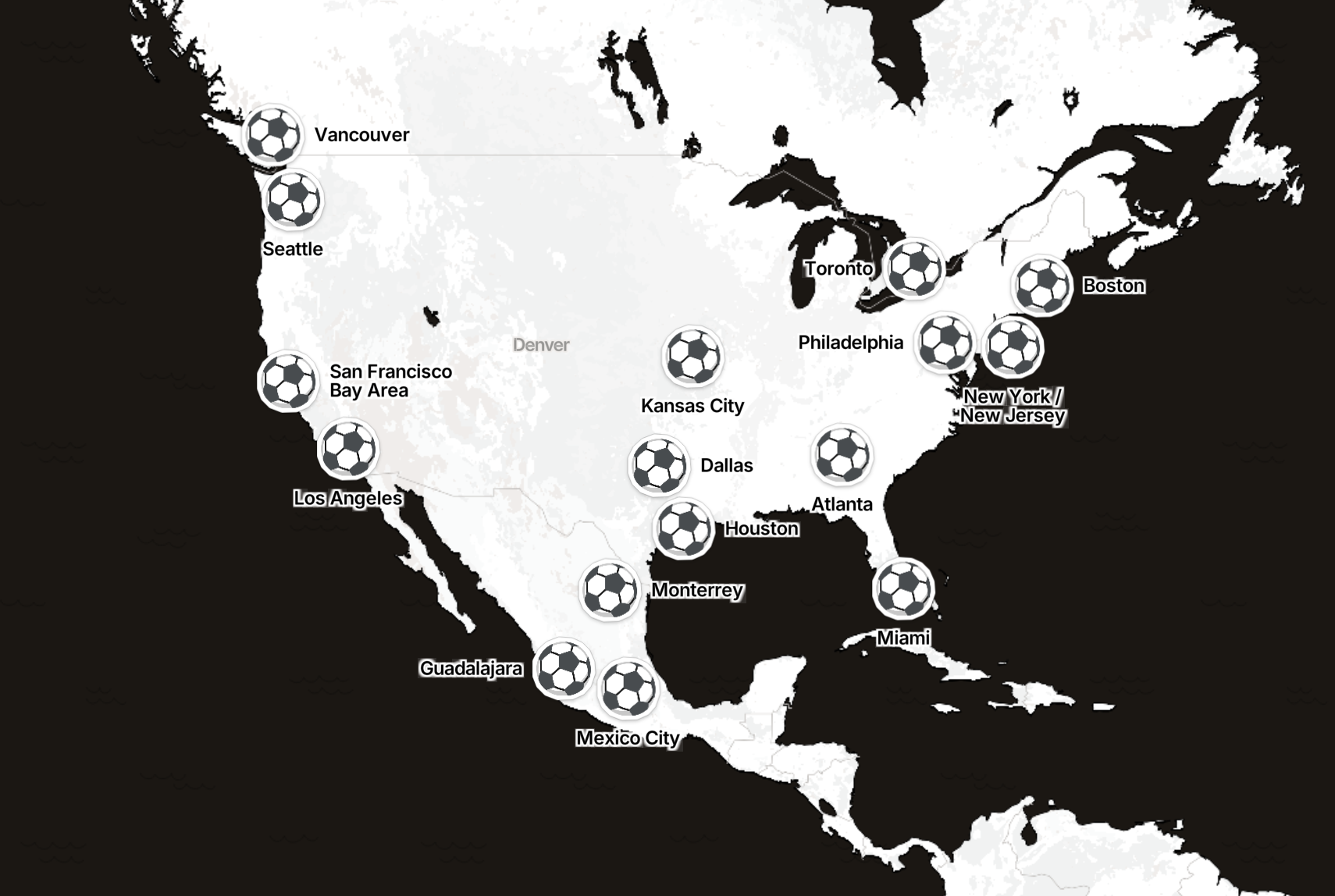
The 2026 World Cup will be one of the biggest moments North America has ever hosted. Sixteen cities across the U.S., Canada, and Mexico will welcome millions of visitors — fans planning once-in-a-lifetime trips, and tourism boards preparing to host them.
Whether you’re a fan learning how to prepare for the World Cup 2026 or a tourism team designing visitor resources, maps play a central role. They help people understand where games are held, how to navigate between cities, and what to explore beyond the stadium.
PamPam is an AI map maker that helps you make your own custom maps. You can make interactive maps, travel maps, and simple map animations in seconds, all designed to look beautiful and easy to share. For the World Cup, that means you can plan your trip across host cities — or create guides that help fans explore your region.
You can explore ready-made World Cup maps here:
https://www.pampam.city/world-cup-2026-maps
Or build an event map of your own:
https://www.pampam.city/event-map
Here’s how both fans and tourism organizations can prepare for the tournament with clearer, more useful maps.
For fans: plan your World Cup trip with clarity
Traveling during the World Cup is exciting — and a bit overwhelming. Stadiums are spread across multiple cities, flights fill quickly, and each region has its own culture, layout, and distances to understand.
A personalized map makes the planning easier.
Start with your match cities
PamPam includes prebuilt maps for each host city, so you can begin by choosing where you're going:
New York/New Jersey, Philadelphia, Boston, Atlanta, Dallas, Los Angeles, Vancouver, Toronto, and more.
You can quickly add:
- Your hotel or Airbnb
- Stadium locations
- Transit hubs
- Neighborhoods you want to explore
The map becomes your trip’s anchor — something you can keep referring to as you make decisions.
Map out the things you want to see
Every host city has its own rhythm. Some fans want food spots or bars; others want museums or family-friendly stops. PamPam’s AI helps you find what’s nearby without researching everything manually.
Try prompts like:
- “Best restaurants near Lincoln Financial Field”
- “Things to do around Toronto’s stadium”
- “Coffee shops near downtown Vancouver”
The map updates instantly, and you can adjust or remove items as plans evolve.
Plan routes between host cities
If you're attending matches in multiple cities, the distances can be significant. PamPam lets you map routes between cities, mark overnight stops, and note must-see places along the way.
Fans often create:
- East Coast travel routes (Boston → NYC → Philly)
- West Coast plans (LA → San Francisco → Vancouver)
- Cross-border itineraries (Toronto ↔ U.S. host cities)
This gives you a sense of timing and travel flow before you book anything.
Share or export your plan
You can keep your map private or share it with friends you're traveling with. Export an image for your phone or create a short map animation if you want to post your travel plan on social.
For tourism boards: help fans explore your region
Millions of visitors will be looking for guidance — where to stay, how to get around, and what’s worth doing before and after matches. Clear, welcoming maps can become one of your most useful tools.
Create maps people can copy
With PamPam, you can build a citywide World Cup guide and let fans duplicate it into their own accounts. They can add their hotels, adjust categories, and personalize the experience. It becomes a shared planning tool rather than a static brochure.
Tourism boards often map:
- Stadium districts
- Local transportation options
- Dining and nightlife areas
- Cultural neighborhoods
- Fan zones, events, and viewing locations
- Recommended routes between attractions
It’s a way to help visitors navigate your city with confidence.
Embed maps directly onto your website
PamPam maps embed cleanly on tourism landing pages, stadium guides, and visitor information hubs. They’re fully responsive, so fans can explore them on their phones during the trip.
When you update your map — new events, new recommendations, road closures — every embed updates instantly.
Create social content and printed materials
PamPam also lets you export polished images or create simple video map animations. Tourism teams use these for:
- Social campaigns
- Visitor guides
- Airport or hotel lobby screens
- Press kits
- Partner toolkits
A clear map often communicates more quickly than paragraphs of text.
Preparing for a global moment
Both fans and tourism boards share the same goal: making the 2026 World Cup feel welcoming, organized, and unforgettable. Maps help bridge the distance between cities, stadiums, and local culture.
PamPam’s tools are designed to make that process simple — whether you're planning your own travel or helping the world navigate your region.
Start exploring World Cup maps:
https://www.pampam.city/world-cup-2026-maps
Create your own event map:
https://www.pampam.city/event-map
We’d love to hear how you’re using maps to get ready for 2026. Every insight helps us support fans and host cities even better.